Economics
OBAMA RESPONDS TO ISIS BURNING PILOT ALIVE – BY PROMOTING OBAMACARE!
GRUBER: “Lack of transparency is a huge political advantage.”
Dr. Ben Carson on ‘The View’: Running for President ‘Not Something that I Desire to Do’
Shark Tank’s Kevin O’Leary Schools CNN’s Erin Burnett on Economics and the “1%”
Anatomy of an Obama Supporter
Margaret Thatcher’s 1987 election interview with Sir Robin Day
How To Talk To A Liberal: Oil and Gas Prices
I once got into a discussion on Facebook with a friend of mine from high school 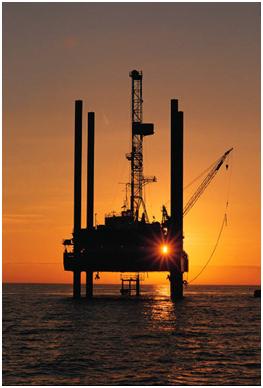 regarding the history of oil and gas prices. He believes that “green” energy is the only way to become energy independent and that the U.S. is unfairly using more than it’s share of the world’s oil, citing the alleged fact that we produce 20% of the supply but use 80% of it. This was my rather lengthy reply.
In 1973 the Nixon administration (yes a Republican) began over-regulating the production of oil in the U.S. making it necessary to increase foreign imports (up to 35% of U.S. consumption). In the same year, the U.S. sent military assistance to Israel who had been attacked by members of OPEC. In retaliation OPEC placed an oil embargo on the U.S. and increased the price for other nations by 70%. Oil in the U.S. then had to be rationed to the people (you could only get gas at certain times, and never on Sundays).
Since then, more and more regulations have been put on U.S. production of oil starting with Carter’s MEOW initiative and creation of the Department of Energy, making it harder and harder to drill for domestic oil and causing us to be more and more dependent on foreign oil. This is not, as some would have us believe, because we are “running out of oil.” The U.S. is sitting on one of the largest oil reservoirs in the world, an estimated 2.3 trillion barrels (300 years) worth to be exact. It is current technology and excessive regulation that is preventing us from getting at it.
The 20% and 80% figures that the Obama used in his reelection speech are blatantly stretched considering that those figures only apply to current tapped reserves; they do not include the amount of oil that is not being drilled or used in the current economy. So yes the U.S. government is being selfish because we refuse to drill for our own oil and would rather drain the supplies of other nations instead.
Special thanks to: Buy and Hold, Antenna Group, and Kiplinger.
Ben Shapiro Talks Politics to Young Americans Foundation
Keynesian Economics, and Why It Fails
Keynesian economics. You’ve probably heard the phrase before; it’s usually touted by liberals as the ultimate example of perfected economic policy. My college professor explained that Keynesian economics is the idea that the government should spend extra money when the economy is down in order to stimulate it, then cut back on spending when the economy is good. FDR used this model with his New Deal programs, as has the current president with his 2009 Stimulus Program (though both without ever cutting back on spending).
Well my 18-year-old brain was essentially mush at the time I entered college–not completely, but just about. I bought this ideology hook, line, and sinker…then. Now after 4 years of my own study in the school of common sense I’ve realized that my beloved college professor left half the story out of the lecture. The only way that government has any money is by taking it out of the private sector with the down economy, thereby making the problem worse. Certainly large government picks and chooses who gets the money as it sees fit, but it cannot produce more money–only a thriving private sector can do that.
With all this talk of governments spending money, Keynesian economics begins to sound very much like redistribution of wealth (see theft). Well here’s the bombshell: it is. Keynesian economics follows the same idea that the government knows how best to spend money, and if it can only spend enough it will eventually stimulate a struggling economy. The big problem is that government spending has the exact opposite effect, dragging a slow economy into a worse and worse state. So it really doesn’t matter if you call it Keynesian, or redistribution, or Marxism–they all have the same economically destructive effect.
 WarriorWoman91