Entertainment
Why THIS Christian is Going to See “Beauty and the Beast”
There has been a great deal of controversy surrounding the all eged “gay moment” in the upcoming release of the live action version of Beauty and the Beast. EXPLICIT! said The Telegraph. EXCLUSIVE! said The Guardian. DISNEY’S FIRST GAY CHARACTER! Even the Russians are upset (now we know it must be bad).
Amidst all this controversy, many Christians have decided to boycott the remake of an otherwise beloved classic. From cancelling their trips to Disney World, to signing petitions, to even banning the movie from a theater entirely–Christians everywhere are joining prominent leaders like Franklin Graham in their call to protest Beauty and the Beast.
There’s just one problem with all of the hype around this movie: This isn’t the first time Disney has inserted gay characters. In fact, one of the most popular Disney movies of all time turned its entire plot and main character into a gay metaphor, seeking to normalize the gay lifestyle and romanticize the process of “coming out” all within a children’s movie. Which obscure film would dare to contain this kind of message? FROZEN.
That’s right, folks! This wildly popular film–particularly among Christians–was a gay metaphor from start to finish. From the main character (Elsa) kept locked away in her “closet” for much of her childhood, to her sudden “coming out” and rejection by society, even to the final phrase “true love” which melted even the coldest heart that stood against Elsa’s acceptance into society.
Christians never boycotted Frozen–in fact, they celebrated it! I’ve even sat in church services in which Frozen was used AS THE SERMON ILLUSTRATION. The idea that Christians are now taking some kind of moral stand against the evil messaging behind Beauty and the Beast, is laughable in the face of the gay metaphor that many unwittingly celebrated when Frozen was released in 2013.
Now if you’re about to delete “Let It Go” from your iTunes over this, please wait. There is this notion that simply because the intent behind the production or messaging of a movie was bad, that must therefore make the product itself bad. This is simply not the case. There is no possible way that Christians can ever boycott every movie or every song or every message that does not promote Christian values. This is why I am going to go see Beauty and the Beast just as I went to see Frozen–not because I support or promote gay marriage or the gay lifestyle, but because my life cannot be ruled by the intentions of others. The only intentions anybody can control are their own; so I intend to see this movie, speak out about any minor negative aspects, and overall enjoy the film.
Mark Levin interviews Ben Shapiro about his book “True Allegiance” (October 27 2016)
Luke Cage | Official Trailer [HD] | Netflix
Greatest Infomercial of All Time: Neighborly Phones
WONDER WOMAN Comic-Con Trailer
2 Reasons Why Zootopia is Dangerous Propaganda
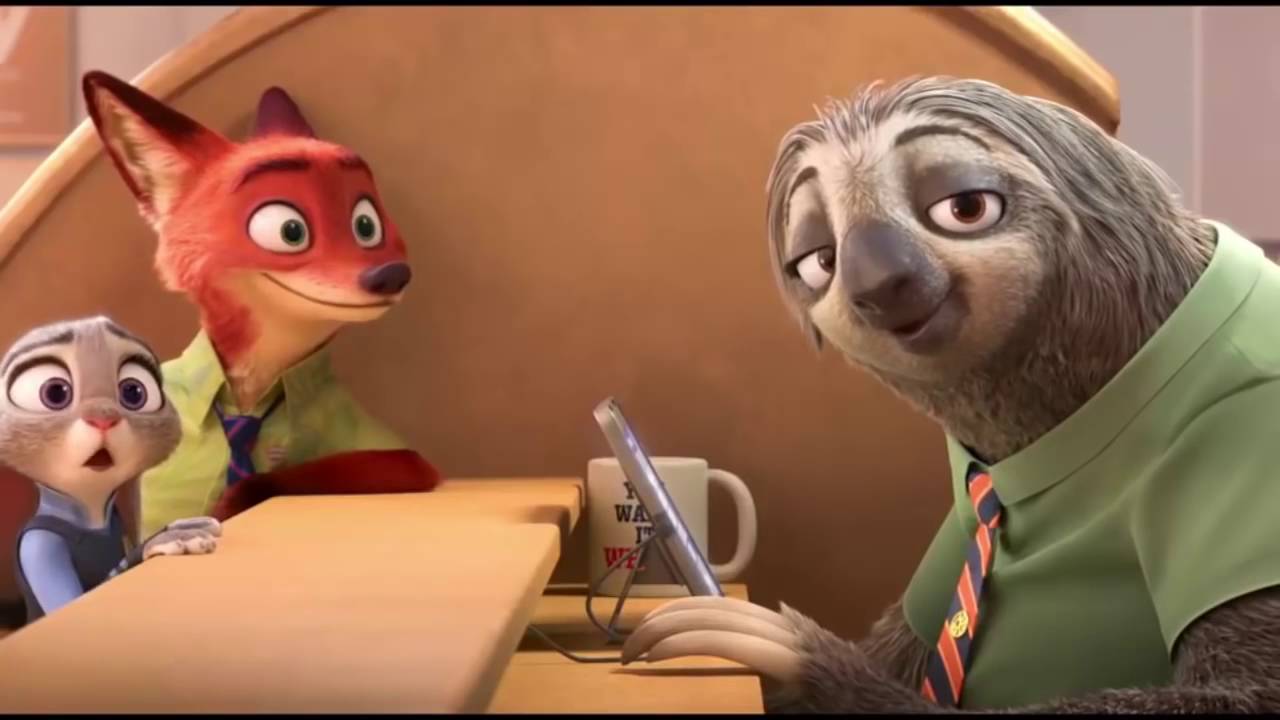 I started watching Zootopia with very few expectations. My siblings told me it was a cute, fun movie that they thought I would like, and since I’d had no previous exposure to it outside of a poster I thought I would give it a try. I’m sorry to say I was very disturbed the blatant political messaging being promoted in a movie targeting children–indeed this movie promotes a dangerous form of propaganda on two major counts.
- It conveys a deeply racist underlying theme.
That’s right, from the company that said portraying slaves on a plantation in Song of the South was too racist, Disney portrays predators as a restrained evil that is predisposed to abuse the non-predatory animals who are considered the oppressed. In the movie, predators must be kept away from certain plants that could cause them to revert back to the dangerous, oppressive animals that they biologically are. This is similar to the real world, where the left tries to promote the notion that white, European members of the capitalist society are predisposed to oppress minorities in Western countries and therefore must atone for this predisposition by making concessions to minorities–special programs, affirmative action, apology tours. These anthropomorphic creatures provide commentary on humanity, indicating that certain groups of human beings are biologically predisposed to oppress others. This is gross and disgusting racism at its finest, perpetuated by a leftist agenda that seeks to indoctrinate kids at a young age into thinking its ok.
Proponents of Zootopia will point out that at the end of the movie one of the “oppressed” characters–a sheep to be precise–uses the plant to frame the predatory animals as being dangerous, portraying an imperfect and, dare I say, sinful member of the oppressed. They also will point out that the hero of the movie discovers that non-predators are also capable of devolving into non-anthropomorphic animals, dissuading many adults from accusing the movie of bigotry since the ending allegedly made an attempt at achieving balance. The problem with these arguments is that both of these revelations occur at the end of the movie and are largely underdeveloped. After over an hour of the notion of predisposed bigotry being pumped into the audience, it’s difficult to come away from the movie without some of that ideology rubbing off. Think that the messaging will go over the audience’s head? Then how on earth will they understand the small, allegedly balanced take on the situation in the last 15 minutes?
2. It portrays Christians as right-wing bigots with closed minds and complacent attitudes.
This is the part that is so personally offensive to me–the idea that of all people Christians are the ones that are closed minded and predisposed to bigotry. Near the beginning of the movie there is a scene in which elephants running an ice cream shop refuse service to foxes due to their bigotry regarding the foxes’ lifestyle. It is willful ignorance for an audience member to come away from that scene without connecting it to real-life scenarios where Christians have to refuse to cater or photograph gay weddings or be in violation of their faith. This pushes the idea in front of children that people who refuse service to customers due to their lifestyle are evil. As those children get older and see that there are people who refuse service to customers asking them to violate their faith, they will remember the teachings of this movie, and logically side against people of faith.
How did I know any of the characters were Christian or right-wing? This is where more bigoted stereotyping comes in–Southern accents, traditional family structures, and especially the mention of “speaking in tongues” which is a specific reference to the Pentecostal denomination of Christianity. The hero’s parents tell her that they needed to open their minds to other people with different lifestyles and that they changed from their “backward” ways by following her example. These are typical Hollywood stereotypes drawn from movies like Footloose that push the false impression that the average Christian is a hick from the 1800s looking to ruin your good time.
I could tell you about just how false this stereotype of Christians is–how Christians have historically been the group at the forefront fighting against slavery, against Jim Crow, against tyranny, and against bigotry. However, it is more important for Christians in particular to realize that this idea that we must atone for society’s past failures by providing government niceties to minorities–the hero became a police officer via the government Mammal Inclusion Initiative–is profoundly anti-Christian. No one can atone for their forefathers’ sins or even their own sins without the blood of Jesus Christ, yet I’m hearing Christians buy into the leftist moral posturing that is falsely critical of crimes Christians did and do not commit. Certainly Christians are not perfect, but we cannot make ourselves atoned from our sins by bowing to the agenda of moral relativism and should not be promoting this ideology to our children.
Conclusion
Propaganda has a profound effect on society when it is targeted at children; political messaging wrapping in bright colors and fluffy bunnies. Whether it is in extreme cases as in Hilter’s indoctrination of German youth or in the political programming provided by Hollywood, children imitate the behavior that they see on T.V. and in movies and apply it to their lives when they are older. If this were not the case, why put a political message in a children’s movie at all? If the messaging really did go over their heads it would be a waste of a message in a useless medium. This is why the left quietly inserts gay and lesbian characters into children’s movies like Frozen and Finding Dory. It’s why gay history is now being taught to kindergartners in California schools. Children today will dictate what society is tomorrow based on what they are taught when they are young, which is why I would never allow children that I might be responsible for to watch Zootopia.
 WarriorWoman91