founding fathers
Matt Drudge Speaks To Press Club (Full) – June 2, 1998
Glenn Beck Traveling with His Wife (Very Funny)
Who Will Defend Your Freedom?
I was having a discussion with a friend of mine about why teens of our generation hated Bush so much. He told me when he was in junior high and high school the main reason that they hated Bush was because they thought he was going to bring the draft back following the attacks on 9/11. They feared they would be required join the military services against their will simply with the stroke of then President Bush’s pen, and they hated him for it.
The problem with this point of view is that it has no regard for the price of freedom. I wish I could ask those students where they think freedom comes from? Do they think that they are entitled to it and that the rest of the world just accepts that entitlement as a given? Do they think that threats against our freedom are obsolete and that we don’t need to defend them anymore? Or would they just rather that someone else did the dying while they stayed home and enjoyed the freedom?
While few would admit it, a large portion of my generation would selfishly answer yes to these questions. The idea that freedom requires work and sometimes death in order for it to continue is completely foreign to us, as we have never experienced anything else. Certainly nobody likes to be told what to do or be forced to do something that they don’t want to do. However, when placed in the context of somebody crashing a plane into your building or invading your country this is all the more reason to fight to protect your freedom. When we realize just how easily liberty can be lost we feel an urgent desire to defend it without need of coercion or draft. Thanks to all who heeded that urgency, and gave the ultimate sacrifice so that we could be free.
“Greater love has no one than this, that one lay down his life for his friends.” John 15:13
WWII Internment Camp Survivor Harassed By IRS
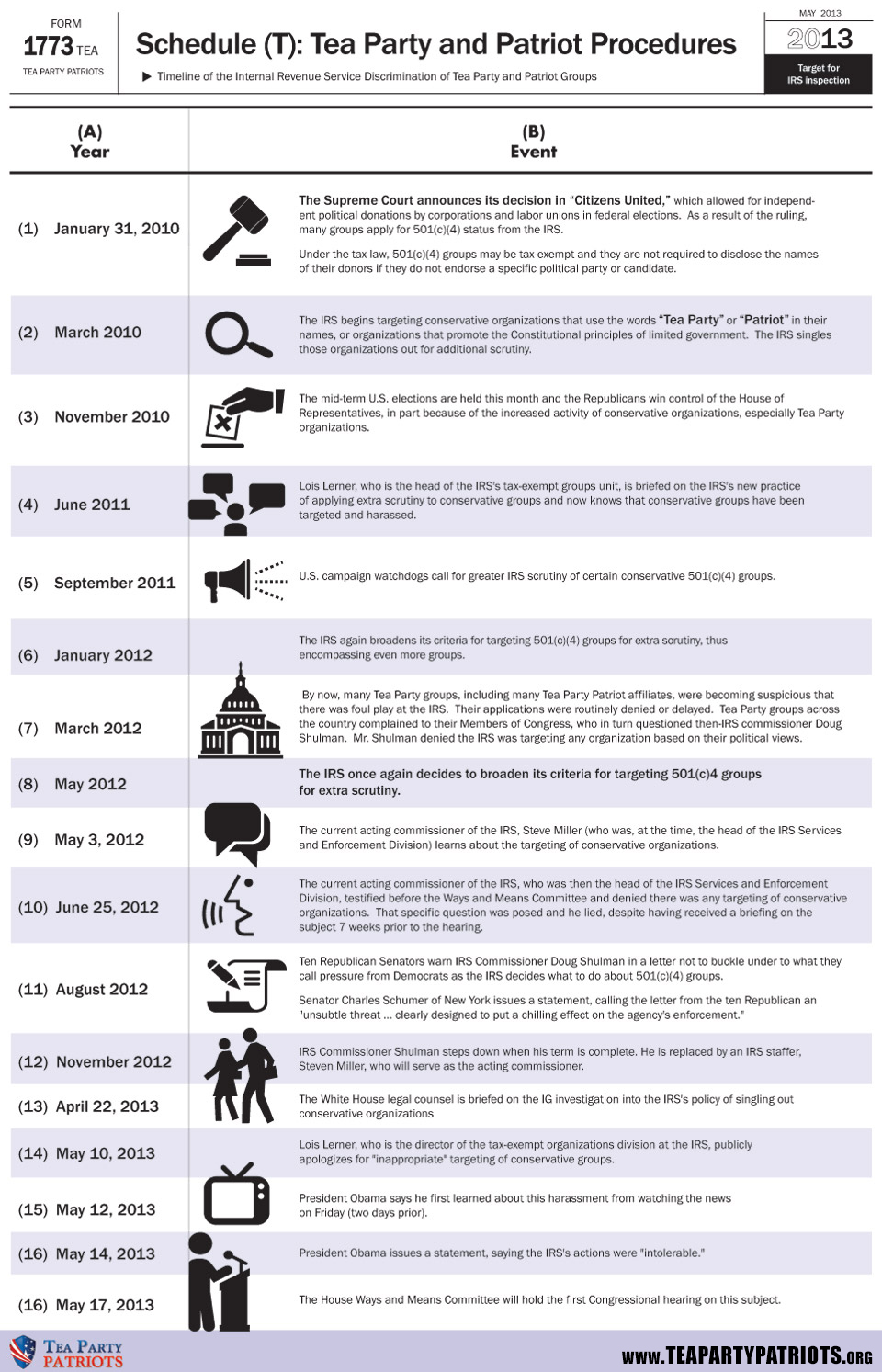
INFOGRAPHIC: IRS Scandal Timeline
Gregory Hicks’ 30 Minute Recount of Benghazi Attack
4 Things I Learned from the Benghazi Hearing
So these are the 4 things I learned from watching the Benghazi hearing.
1. Ambassador Stevens called former deputy chief of mission in Libya Gregory Hicks saying that the Embassy was “under attack” just before the cell phone call was disrupted.
2. Ambassador Stevens was taken to an enemy hospital.
3. The crime scene was not secured and the FBI was not allowed to go in for 17 days. This was the direct result of UN Ambassador from the US Susan Rice and her statement that the attack was actually a protest over an anti-Muslim YouTube video. She essentially called the president of Libya a liar for calling the incident a terror attack, embarrassing and infuriating him.
4. Lieutenant Colonel Gibson is the man that knows who gave the order to stand down during the attack.
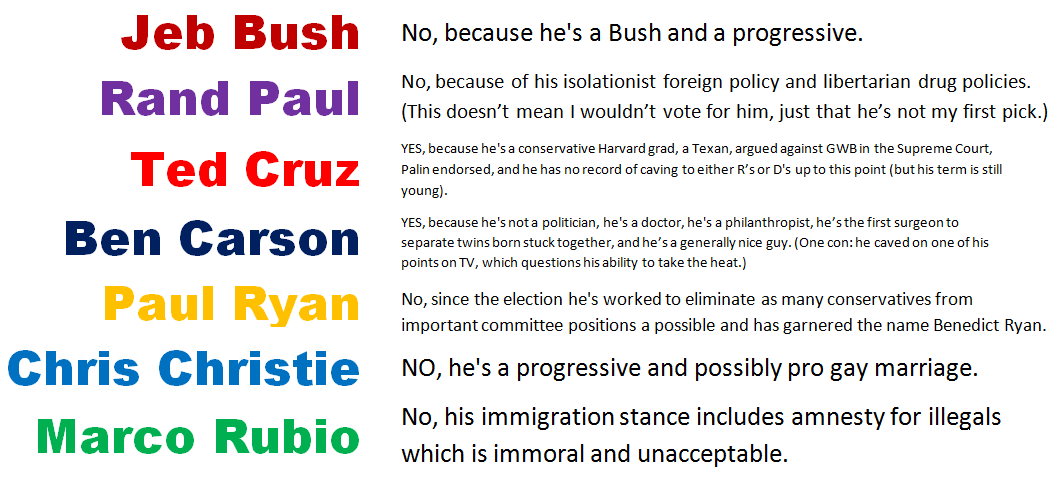
My Random 2016 Thoughts
Translating the Declaration of Independence
The Declaration of Independence makes several definitive statements regarding the rights of the people and where those rights come from. First, the Declaration acknowledges that the source of rights is the Creator, calling them the “Laws of Nature and of Nature’s God.”
Second, it claims that all men are created equally free to govern their own actions, thus requiring the consent of the governed in order for just government. Being unwilling to recognize these truths, the British government had failed in it’s sole duty of government of securing the rights of “life, liberty, and the pursuit of happiness” for the people, according to the Founding Fathers.
These ideals come in direct opposition to modern liberal and Progressive thought. For instance, the Declaration states that “all men are created equal,” meaning that they are all born with the same human rights that the government needs to respect. The modern liberal or Progressive definition is that men are not created equal and the government needs to step in via redistribution and make them equal. These definitions are fundamentally incompatible, and one cannot coexist with the other.
This concept of unequal wealth distribution reflecting the inequality of rights is not simply an idea dreamed up by modern day politicians like Barack Obama or Hillary Clinton. Karl Marx, Teddy Roosevelt, and Woodrow Wilson are only a few historical names associated with this Progressive ideology. According to Franklin D. Roosevelt, “Necessitous men are not free men,” meaning that poor men are not free. This notion is flawed in that simply because a man is poor does not mean he is prevented by government from being wealthy. It may mean that circumstances or a down economy caused his lack of wealth. Or it may mean that he is unwilling to do the work in order to be prosperous. As long as all men have the opportunity to choose what to do with their lives, they are free from government tyranny.
 WarriorWoman91