Politics
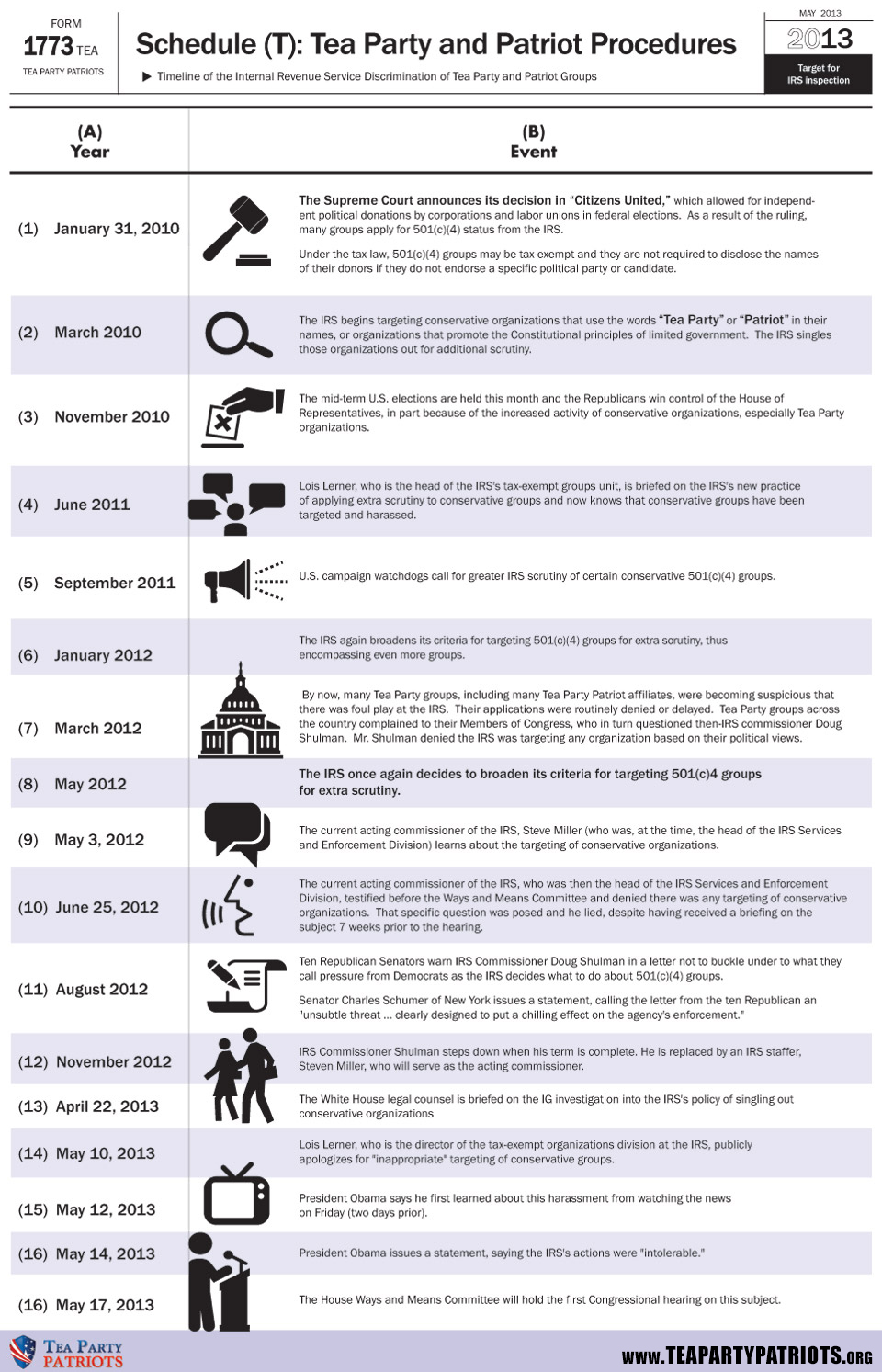
INFOGRAPHIC: IRS Scandal Timeline
Gregory Hicks’ 30 Minute Recount of Benghazi Attack
4 Things I Learned from the Benghazi Hearing
So these are the 4 things I learned from watching the Benghazi hearing.
1. Ambassador Stevens called former deputy chief of mission in Libya Gregory Hicks saying that the Embassy was “under attack” just before the cell phone call was disrupted.
2. Ambassador Stevens was taken to an enemy hospital.
3. The crime scene was not secured and the FBI was not allowed to go in for 17 days. This was the direct result of UN Ambassador from the US Susan Rice and her statement that the attack was actually a protest over an anti-Muslim YouTube video. She essentially called the president of Libya a liar for calling the incident a terror attack, embarrassing and infuriating him.
4. Lieutenant Colonel Gibson is the man that knows who gave the order to stand down during the attack.
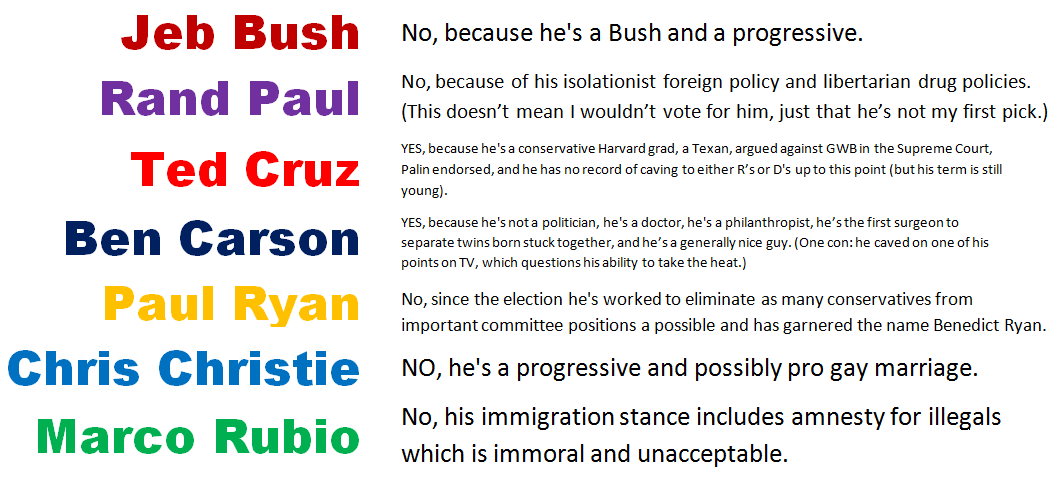
My Random 2016 Thoughts
Translating the Declaration of Independence
The Declaration of Independence makes several definitive statements regarding the rights of the people and where those rights come from. First, the Declaration acknowledges that the source of rights is the Creator, calling them the “Laws of Nature and of Nature’s God.”
Second, it claims that all men are created equally free to govern their own actions, thus requiring the consent of the governed in order for just government. Being unwilling to recognize these truths, the British government had failed in it’s sole duty of government of securing the rights of “life, liberty, and the pursuit of happiness” for the people, according to the Founding Fathers.
These ideals come in direct opposition to modern liberal and Progressive thought. For instance, the Declaration states that “all men are created equal,” meaning that they are all born with the same human rights that the government needs to respect. The modern liberal or Progressive definition is that men are not created equal and the government needs to step in via redistribution and make them equal. These definitions are fundamentally incompatible, and one cannot coexist with the other.
This concept of unequal wealth distribution reflecting the inequality of rights is not simply an idea dreamed up by modern day politicians like Barack Obama or Hillary Clinton. Karl Marx, Teddy Roosevelt, and Woodrow Wilson are only a few historical names associated with this Progressive ideology. According to Franklin D. Roosevelt, “Necessitous men are not free men,” meaning that poor men are not free. This notion is flawed in that simply because a man is poor does not mean he is prevented by government from being wealthy. It may mean that circumstances or a down economy caused his lack of wealth. Or it may mean that he is unwilling to do the work in order to be prosperous. As long as all men have the opportunity to choose what to do with their lives, they are free from government tyranny.
Why Should We Care About the Declaration of Independence?
The Declaration of Independence is one of the most important founding documents of the United States. However, in modern days it becomes overlooked–why should we care about the complaints of some colonists over 200 years ago against a king long dead? What I have come to realize is that the Declaration is the heart and soul of the United States; it defines it’s purpose as a whole.
Thomas Jefferson said that the purpose of the Declaration of Independence was to express and justify the position of independence that the colonies were taking against the British government. It acknowledges the fact that human beings have certain “unalienable rights” simply by being born, from “nature and nature’s God.” This is the foundation of the Unites States–the idea that the rights of “life, liberty, and the pursuit of happiness [property]” are inherent to the people that can neither be given or taken away by the government.
The best way to look at the Declaration of Independence is in the context put by Abraham Lincoln. He called the principle “Liberty to all”, embodied by the Declaration, the “apple of gold.” He also called the Constitution the “frame of silver.” Lincoln said that the frame of silver (the Constitution) was made to “adorn” and “preserve” the “apple of gold” (the principle “Liberty to all”). The frame is not to take precedence over the apple, but exists to perpetuate the existence of the apple.
Ultimately, the reason that the Constitution is so easily being dismantled, is because we have forgotten what its purpose is: to protect and preserve the principle “Liberty to all.” The Declaration of Independence is still crucially important to American society because it reminds us of the principles that define the United States and gives us a sense of urgency to uphold its constitution.
The IRS Version of Sleeping Beauty
I owe you, I robbed from you once upon a scheme. I owe you, that grief in your eyes is so familiar aggrieved. Yet I know it’s true, that income is seldom all it seems. But if I owe you, I’ll know what you’ll do! You’ll pay me at once, the way you did once upon a scheme.
Authored by: Kelly and Theresa Campagna
Should Conservatives Moderate Their Position?
I frequently hear from different political organizations discussing new strategies in order for the GOP to win future elections. One school of thought suggest that social conservatives need to moderate their position on gay marriage, since according to some, “they’ve already lost [the argument].”
Here’s the problem: the GOP has already lost the conservatives, be they social or fiscal. 4 million conservatives stayed home in the last election, causing Mitt Romney’s loss. We haven’t won the presidency since 2004; we couldn’t even win back the Senate in 2012. The RNC is kidding itself if it believes that the Republican party still has any presidential viability or that it is going to recover any as it continues to look more and more like the Democratic party.
The voters are not obligated to change their beliefs simply in order to fit in a political strategist’s box of acceptable candidates that are allowed to run (and ultimately lose). The Republican Party needs to decide if it is going to represent conservatives, or if it is going to represent some other ideology. “He who tries to please everyone, pleases no one.” -Aesop
 WarriorWoman91