breitbart
Can Obama Use the Commerce Clause to Implement his Agenda?
There are two ways by which the Commerce Clause is interpreted: broad application and narrow. These application types are used based on the definition of commerce believed to be attached to Congress’s power to “regulate commerce,” (Art. 1, Sec 8.3). Those who believe that commerce should be defined as any “gainful activity” (Barnett, 2001, p. 4) tend to apply the broad application to the interpretation of the Commerce Clause. On the other hand, those who believe that commerce is defined as merely the transfer of goods and services gravitate toward the narrow application of this clause. Below is a brief argument as to why the broad interpretation of the Commerce Clause should not be used.
The primary reason why the broad interpretation of the commerce clause should not be used is because it falls outside the boundaries of the original intent of the Founders. Their intent was obviously to institute a limited government, and the notion that any “gainful activity” should have the opportunity of being regulated goes far beyond any reasonable definition of the word “limited.” Gainful activity could be applied to virtually anything—from production, to agriculture, to your child’s lemonade stand, all of which could affect interstate commerce in one way or another. If the broad interpretation of the commerce clause is to be used on such a widespread and regular basis, the U.S. should cease to refer to itself as a limited government.
In contrast, the narrow interpretation of the commerce clause reflects both the meaning of the language used at the time of the creation of the Constitution as well as the original intent of the Framers. Limited government is more appropriately reflected when the definition of commerce is also limited to the transfer of goods and services. Also referred to as “intercourse,” this definition specifies the type of interstate economic activity that Congress is allowed to regulate, rather than leaving the interpretation open to any interstate economic activity as is the case with the broad interpretation. For these reasons, I believe that the narrow interpretation is more in keeping with the original intent of the Framers when they created the Constitution.
Human Capital – Episode 2: Inside the Planned Parenthood Supply Site
Biggest and Best Tweets from the #GOPDebate!
OMG LETS GO #Cleveland pic.twitter.com/5HinrB1OQV
— Charlie Kirk (@charliekirk11) August 7, 2015
A little #GOPDebate prep with my two best advisers. #CruzCrew http://t.co/nICXayCSI4 pic.twitter.com/fA4EQQhFW1
— Ted Cruz (@tedcruz) August 7, 2015
Please 🙏 👉@realDonaldTrump, if at all possible, please fire some of them tonight!🇺🇸 #GOPDebate
— Amy Mek (@AmyMek) August 7, 2015
So extreme she doesn't want to fund people who pick through baby body parts like the button tray at an antique shop. https://t.co/tNnbRTpyHj
— Ben Shapiro (@benshapiro) August 7, 2015
Opposing jihad is "disgraceful"? You're an idiot. https://t.co/1FwfBDCkIz
— Pamela Geller (@PamelaGeller) August 7, 2015
#NatSen #GOPDebate Ready? pic.twitter.com/CwebYZDD0N
— Kira Ayn Davis (@RealKiraDavis) August 7, 2015
.@FoxNews is absolutely ridiculous for not offering a live stream of this #GOPdebate. Living in the stone age and nobody is going to watch
— Kelly Campagna (@warriorwoman91) August 7, 2015
Trump wanted Hillary Clinton at his wedding…why? Her great dancing? #GOPDebate
— Ben Shapiro (@benshapiro) August 7, 2015
Go for the jugular Ben Carson #GOPDebate
— Kelly Campagna (@warriorwoman91) August 7, 2015
GET BACK TO CRUZ!!! #GOPDebate
— Kelly Campagna (@warriorwoman91) August 7, 2015
No, all the viewers already did. https://t.co/czGFoit9sb
— Ben Shapiro (@benshapiro) August 7, 2015
Scott Walker is just not interesting. Sorry. #GOPDebate
— Ben Shapiro (@benshapiro) August 7, 2015
Yay Carly! She made it in there after all! #GOPDebate
— Kelly Campagna (@warriorwoman91) August 7, 2015
I want to hear from Cruz!!! #GOPDebate
— Kelly Campagna (@warriorwoman91) August 7, 2015
Many Republicans are upset about Planned Parenthood?? How can you be a human being and not be upset about those videos? #GOPDebate
— Kelly Campagna (@warriorwoman91) August 7, 2015
Hey @FoxNews let's talk to @tedcruz? Or is he still there??? #GOPDebate
— Kelly Campagna (@warriorwoman91) August 7, 2015
There's a dude name Ted on the stage. He's good at talking. Ask him a question
— Charlie Kirk (@charliekirk11) August 7, 2015
Cruz did not get a chance to talk in that entire section. @FoxNews fails. #GOPDebate
— Kelly Campagna (@warriorwoman91) August 7, 2015
Watching this debate for @tedcruz and they won't let him talk 😤 #GOPDebate
— Kelly Campagna (@warriorwoman91) August 7, 2015
Let @tedcruz speak!!!! #GOPDebate
— Kelly Campagna (@warriorwoman91) August 7, 2015
Cruz hitting it out of the park tonight. .@tedcruz: “Leading from behind is a disaster” #GOPDebate
— Pamela Geller (@PamelaGeller) August 7, 2015
Pastor's kids FOR THE WIN @tedcruz #GOPDebate
— Kelly Campagna (@warriorwoman91) August 7, 2015
Love Ben Carson! #GOPDebate
— Kelly Campagna (@warriorwoman91) August 7, 2015
Here's what I'd do on my first day in office as POTUS: https://t.co/LbwSdzzuMJ
#CruzCrew: help make it a reality: https://t.co/f3Zm5wvcaI
— Ted Cruz (@tedcruz) August 7, 2015
Lessons from tonight: My father was a mailman. Trump owns everything. Pastor's kids rule. & I have a massive crush on Ben Carson. #GOPdebate
— Kelly Campagna (@warriorwoman91) August 7, 2015
Oh come on guys you know you all loved that Rosie O'Donnell line @realDonaldTrump #GOPDebate
— Kelly Campagna (@warriorwoman91) August 7, 2015
Intact Fetuses “Just a Matter of Line Items” for Planned Parenthood TX Mega-Center
Planned Parenthood VP Says Fetuses May Come Out Intact, Agrees Payments Specific to the Specimen
**Warning: Highly Graphic** Third Planned Parenthood Video Details the Pricing and Sale of Baby Body Parts
Cruz accuses McConnell of lying
Second Planned Parenthood Senior Executive Haggles Over Baby Parts Prices, Changes Abortion Methods
Winning the Millennial Vote Superhero Style!
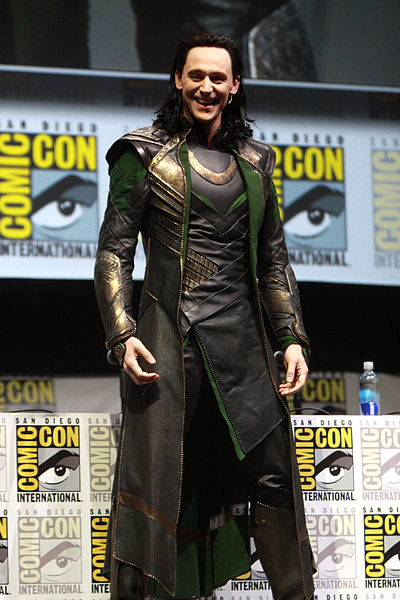
Attribution: Gage Skidmore
One day I’ll make the trip to Comic Con and cosplay as Margaret Thatcher. I’ll set up my own booth and sell tea from Two if By Tea and pocket constitutions. I’m sure I’ll be escorted out in no time, but not before I’ve turned a few heads in the conservative direction. Seriously why don’t more conservatives get involved in pop culture activities? We’re always eight years behind in technology (hello, social media!) and turn up our noses at potentially fun activities like Comic Con because they’re “not serious politics” or some such nonsense. This is how you influence millennials folks–meet them where they are. It’s made ridiculously easy, and only a stuffy old Republican could make the process so complicated.
I want to thank Lisa De Pasquale for writing the stellar article that inspired this response (and for using my favorite comic book villain in the title). Far too often the aged and the aloof complain about the lack of Millennial support of the Republican Party or the conservative cause, yet refuse to take the necessary and often simple steps in order to attract their attention.
 WarriorWoman91